
You Know the Couture Houses. Do You Know Who Makes the Couture?
For 40 years, Mumbai's Chanakya has helped create extraordinary textile work for some of Europe's most famous fashion houses.

Fashion has taught us to recognise its signatures remarkably well. We know what Dior looks like. We can identify the codes of Fendi, Gucci and Armani, recognise the work of major creative directors and recite the histories of European houses whose names have become shorthand for luxury itself. What we know considerably less about are the networks of specialist makers whose hands turn many of fashion's most ambitious ideas into physical objects.
In Mumbai, three exhibitions celebrating 40 years of Chanakya are making that imbalance considerably harder to ignore. Founded in 1986 by Vinod Shah and now led by Karishma Swali, Chanakya has spent four decades working across embroidery, textile development and handcraft, collaborating with international luxury houses including Dior, Fendi, Gucci, Armani and others. Its work sits inside some of the most recognizable collections in contemporary fashion, even if the name Chanakya remains far less familiar to the average fashion consumer than the names appearing on the labels.
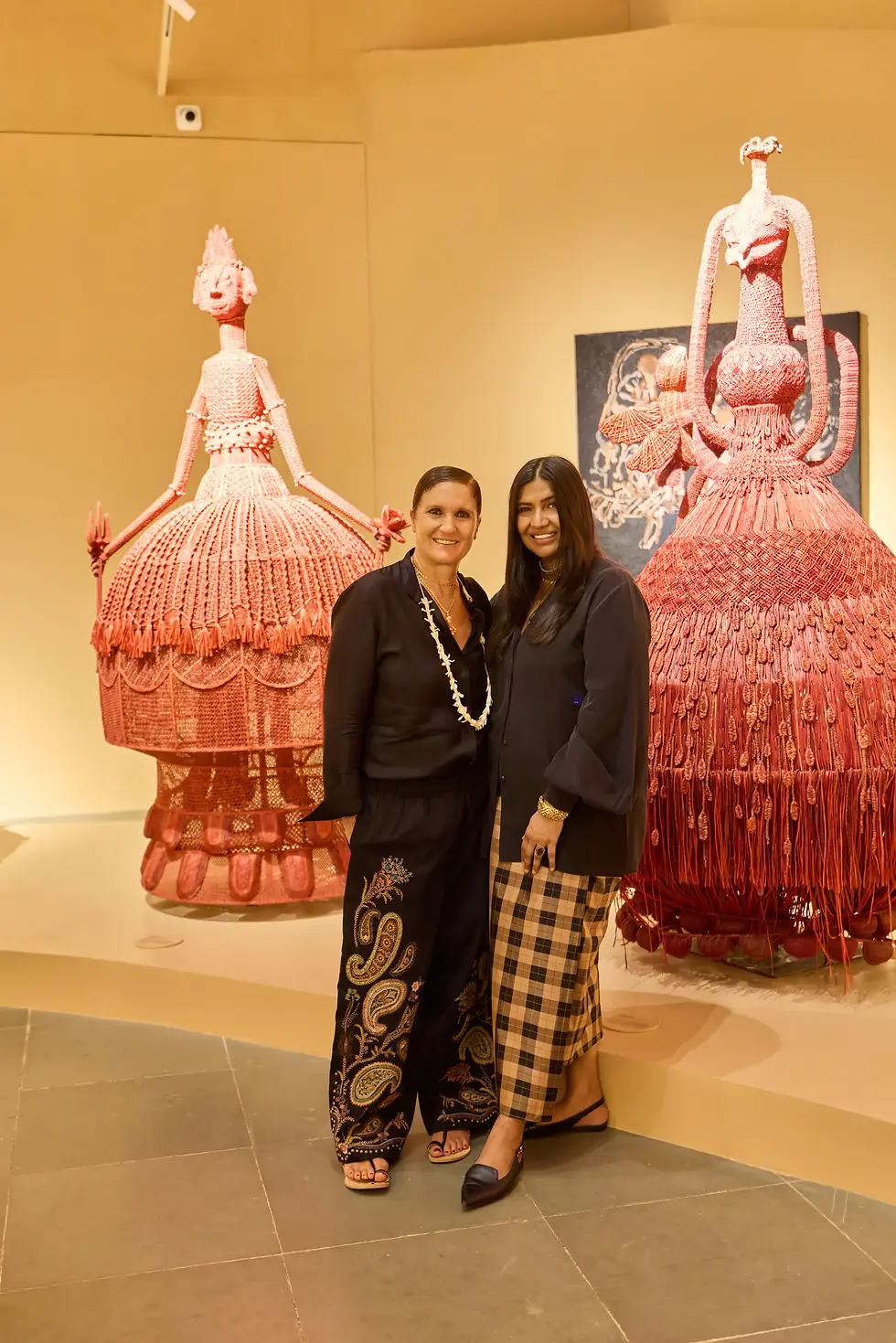
The anniversary exhibitions shift the perspective. Rather than encountering Indian craftsmanship as a component inside a finished European luxury product, visitors encounter Chanakya as an institution with its own history, techniques, artistic collaborations and cultural authority. Among the works being presented is En Route, developed by Swali with Maria Grazia Chiuri and previously shown at the Vatican, a monumental textile project involving the work of women artisans from Chanakya's School of Craft.
That change in framing matters. The embroidery hasn't suddenly become more sophisticated because it is hanging in an exhibition. What has changed is whose name we are being asked to remember.
LUXURY HAS ALWAYS REQUIRED MORE THAN ONE AUTHOR

The mythology of the great fashion house depends heavily on singular authorship. A collection is described as the work of a creative director. A couture gown becomes a Dior, a Chanel or a Valentino. Reviews analyse the designer's references, intentions and technical achievements, while campaigns reinforce the idea that the object emerged from one coherent creative universe. The reality of making extraordinary clothes has always been more complicated.
Luxury fashion relies on networks of embroiderers, textile specialists, pattern cutters, feather workers, pleaters, milliners, shoemakers, metalworkers and other craftspeople whose expertise can take decades to acquire. European fashion has its celebrated specialist ateliers, some of which have become increasingly visible as houses have sought to protect endangered craft. Chanel's acquisition of métiers d'art suppliers and LVMH's investment in artisanal training have helped turn craftsmanship itself into part of luxury's public story.
Yet the geography of recognition remains uneven. When similarly extraordinary expertise exists in India, the work has historically been easier for Western fashion consumers to encounter as an ingredient of European luxury than as an independent creative tradition with its own authorship.
Chanakya complicates that relationship because it cannot easily be reduced to the role of anonymous supplier. Four decades of collaboration have produced an enormous body of technical knowledge, while the institution's work increasingly moves between fashion, education and contemporary art.
The hands executing the work are not incidental to the creative process. Their knowledge determines what is possible.
INDIA ISN'T JUST WHERE THE EMBROIDERY HAPPENS

India's relationship with global fashion is particularly complicated because its textile history predates the modern European luxury industry by centuries. Indian cottons, silks, dyes, embroidery traditions and weaving techniques circulated globally long before today's fashion capitals established their contemporary authority. European appetite for Indian textiles profoundly influenced international trade, dress and eventually industrial production.
Yet modern luxury has often reversed the direction of cultural visibility. Indian skill travels outward while the finished object's identity becomes attached primarily to the European house commissioning it.
Chanakya's collaborations reveal how inadequate that framework has become. The atelier works across hundreds of handcraft techniques, drawing upon textile traditions while also developing new applications through collaborations with contemporary designers and artists. This isn't simply the preservation of historical craft. It is an evolving technical practice capable of responding to the demands of contemporary couture.
That distinction is important because the word “craft” can become strangely limiting when applied outside Western fashion. European ateliers are frequently described through the language of savoir-faire, heritage and luxury. Similar skills elsewhere can be framed as tradition, handicraft or cultural preservation. The techniques may be equally complex, but the vocabulary subtly determines which work is understood as luxury innovation and which is treated as inherited cultural practice. Chanakya increasingly refuses that distinction.
FROM ATELIER TO ART INSTITUTION

The 40th-anniversary exhibitions make that shift particularly visible because they remove textile work from the garment entirely. Embroidery no longer has to justify itself by decorating a dress. It can occupy a wall, construct an image or exist as an artwork in its own right.
En Route is especially revealing. The project emerged through the long creative relationship between Swali and Chiuri, whose tenure at Dior repeatedly brought Chanakya's artisans and the Chanakya School of Craft into highly visible collaborations. The monumental textile works produced through those relationships were not simply decorative backdrops for clothes. They increasingly existed as cultural objects independently of the collections surrounding them.
The Chanakya School of Craft adds another dimension. Established as a nonprofit initiative for women, the school teaches handcraft skills while creating pathways toward economic independence and preserving knowledge that might otherwise disappear between generations. That matters because preservation cannot simply mean putting an old textile behind glass. A craft survives when somebody still knows how to do it, somebody else wants to learn and an economic structure exists that allows both of them to continue.
Fashion is extremely good at celebrating the romance of disappearing craftsmanship. It has historically been less reliable at discussing who receives the economic and cultural value created when that craftsmanship becomes luxury.
WHOSE NAME DOES THE CUSTOMER REMEMBER?
None of this requires pretending that luxury houses contribute nothing beyond a label. Creative direction matters. Design matters. The relationship between designer and artisan can itself produce work neither could have created independently, and Chanakya's long collaborations with international designers demonstrate precisely how productive that exchange can be. The issue is not collaboration. It is visibility.
A customer can look at an extraordinarily embroidered couture gown and know the designer, the collection, the season, the house and perhaps even the celebrity who wore it. The names of the people who spent hundreds or thousands of hours producing its surface may never enter the conversation.
That imbalance is beginning to look increasingly outdated as fashion talks more seriously about traceability, provenance and the value of the handmade. If luxury asks consumers to pay extraordinary prices because an object contains extraordinary human skill, then knowing where that skill comes from should enhance its value rather than threaten the mythology of the house.
Recognising Chanakya does not diminish Dior. Understanding the work of Indian artisans does not make European couture less impressive. It simply makes our understanding of how couture is produced more complete.
THE LABEL WAS NEVER THE WHOLE STORY
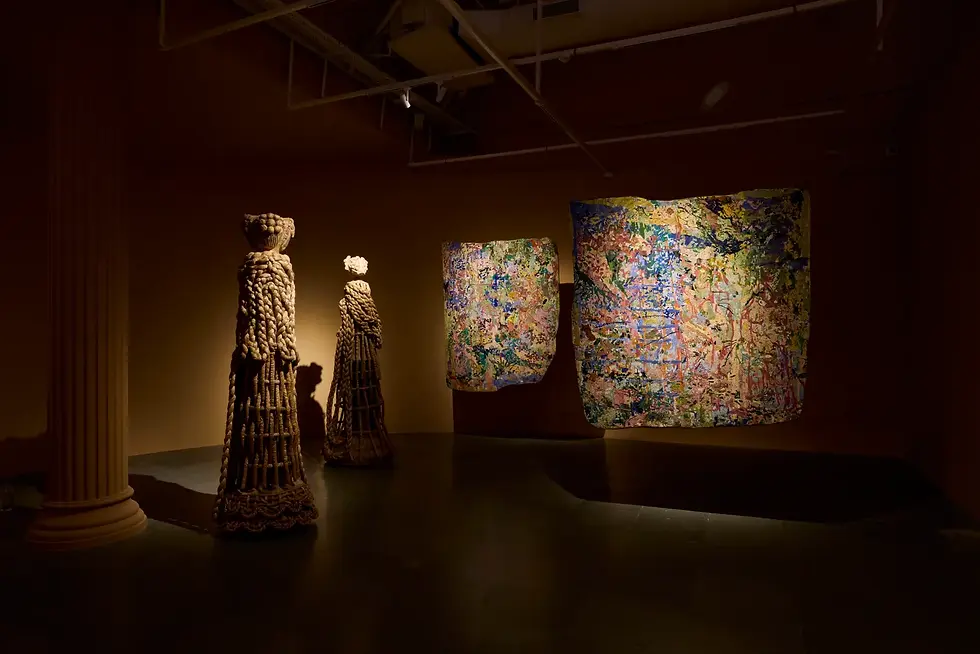
There is something fitting about Chanakya marking its 40th anniversary through exhibitions rather than simply another luxury collaboration. After decades of helping construct the visual worlds of other fashion houses, the institution is increasingly building a public cultural identity under its own name.
That shift reflects something larger happening across fashion. The old geography in which ideas supposedly originated in European capitals while skilled hands elsewhere merely executed them is becoming increasingly difficult to defend. Creative exchange is more complicated, authorship is more distributed and the institutions supplying fashion's technical intelligence are beginning to tell their own stories.
Perhaps that is why seeing Chanakya's textiles in an exhibition feels different from seeing the same techniques on a runway. Once the garment disappears, so does the famous label that usually tells us where to direct our attention. What remains is the work itself, along with the people, knowledge and time required to make it.
Fashion has spent decades teaching us the names of the houses that sell couture. Chanakya's 40th anniversary offers a useful reminder that knowing who made it is a different kind of fashion literacy.


Comments