
When fashion tells someone else's story
Gabriela Hearst's Spring/Summer 2027 collection brought Afghan women's history and craftsmanship to the Paris runway. It also raises an important question about what fashion owes the cultures and communities from which it draws inspiration.
A woman in Afghanistan creates an intricate piece of embroidery. Thousands of kilometres away, that craftsmanship appears on a luxury runway in Paris, admired by editors, photographed by international media and eventually offered to customers who may know very little about the country from which it came. Between those two places lies an entire conversation about cultural exchange, economic opportunity, creative ownership and the responsibilities of an industry that has always looked beyond its own borders for inspiration.
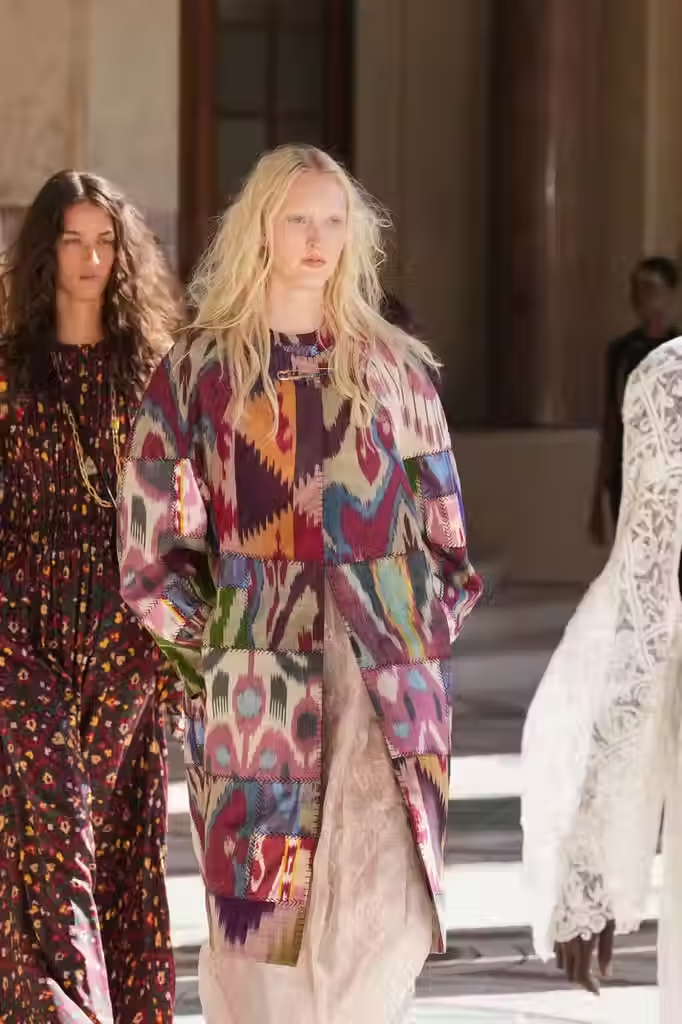
For Spring/Summer 2027, Gabriela Hearst made that relationship central to her collection. Drawing on a century of Afghan women's history, from periods of social reform through decades of conflict and the current restrictions imposed under Taliban rule, the Uruguayan designer brought Afghanistan's textile and jewellery traditions into her established language of considered luxury. Ikat patchwork, mirror embroidery, intricate floral motifs and artisanal details appeared alongside precise tailoring, leather and fluid dresses. The result was visually rich, but the circumstances behind its creation demanded more attention than a conventional runway review could reasonably provide.

Crucially, this was not simply a collection assembled from archival photographs and decorative references. Hearst worked with Turquoise Mountain, a nonprofit supporting artisan communities in Afghanistan, to connect with craftspeople whose work became part of the collection. Afghan artistic contributions also appeared in painted details on jewellery and buttons, while show notes provided guests with historical context. Hearst referred to Afghanistan's approximately 22 million women as her muses, framing the project as an attempt to draw international attention to both their circumstances and their extraordinary creative traditions.
That direct involvement changes the conversation considerably. Fashion has a long history of extracting visual inspiration from cultures without necessarily involving the people who created it. A textile pattern becomes a seasonal print, traditional jewellery becomes an accessory reference, and a centuries-old craft becomes something described in a press release as an exotic influence. The original makers may remain entirely outside the commercial relationship. Hearst's collaboration offers a more substantive model, one in which artisans participate in producing the work rather than merely providing its aesthetic inspiration.
Still, participation alone does not resolve every question. When traditional craftsmanship enters the luxury market, who determines its value? How are the makers credited, compensated and represented? Does the relationship continue after the collection leaves the runway, or does it end when the season changes? These questions are not accusations against Hearst, whose collaboration appears to have been developed with considerable research and an established nonprofit partner. They are questions worth asking precisely because projects like hers have the potential to demonstrate what more responsible cultural exchange might look like.
The political context makes those responsibilities particularly significant. Since the Taliban returned to power in 2021, Afghan women have faced increasingly severe restrictions on education, employment, movement and public participation. Girls are barred from secondary education beyond sixth grade, while women's opportunities to work and participate in civic life have been drastically curtailed. UN Women reported in August 2026 that more than 100 decrees affecting women and girls had been introduced over the preceding five years. These are not distant historical conditions being referenced for dramatic effect. They are the circumstances under which Afghan women are living and, in some cases, continuing to create today.

There is something especially poignant about celebrating women's creative labour at a moment when their independence is being systematically restricted. Embroidery, weaving, painting and jewellery-making can represent far more than decorative traditions. They are forms of knowledge passed between generations, sources of income, expressions of regional identity and evidence of cultural continuity. In environments where women's public visibility is constrained, maintaining those practices can carry additional social and economic importance.
Yet fashion must be careful not to romanticise that reality. The image of women preserving beautiful traditions through hardship is emotionally compelling, but it can also flatten complicated lives into a reassuring narrative of resilience. Afghan women are not valuable because they continue making beautiful things despite oppression. Their rights, ambitions and identities extend far beyond their craftsmanship. Nor should their cultural heritage become inseparable from the political suffering through which international audiences have come to recognise their country.
This is one of the more difficult tensions within Hearst's collection. Afghanistan possesses an extraordinarily rich visual and material history that deserves recognition independent of its contemporary political circumstances. Its textile traditions should not require a humanitarian crisis to become interesting to the luxury industry. At the same time, presenting those traditions without acknowledging the realities faced by the women producing them would create a different kind of omission. Hearst attempted to hold both ideas together, celebrating Afghan artistic achievement while directing attention toward the restrictions under which many Afghan women live.
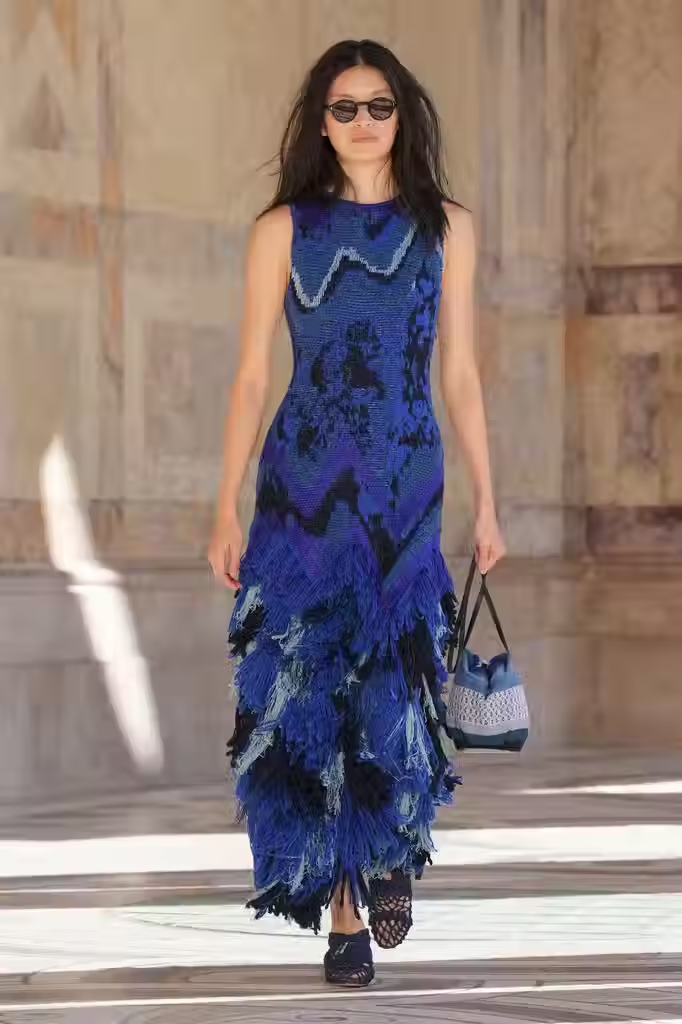
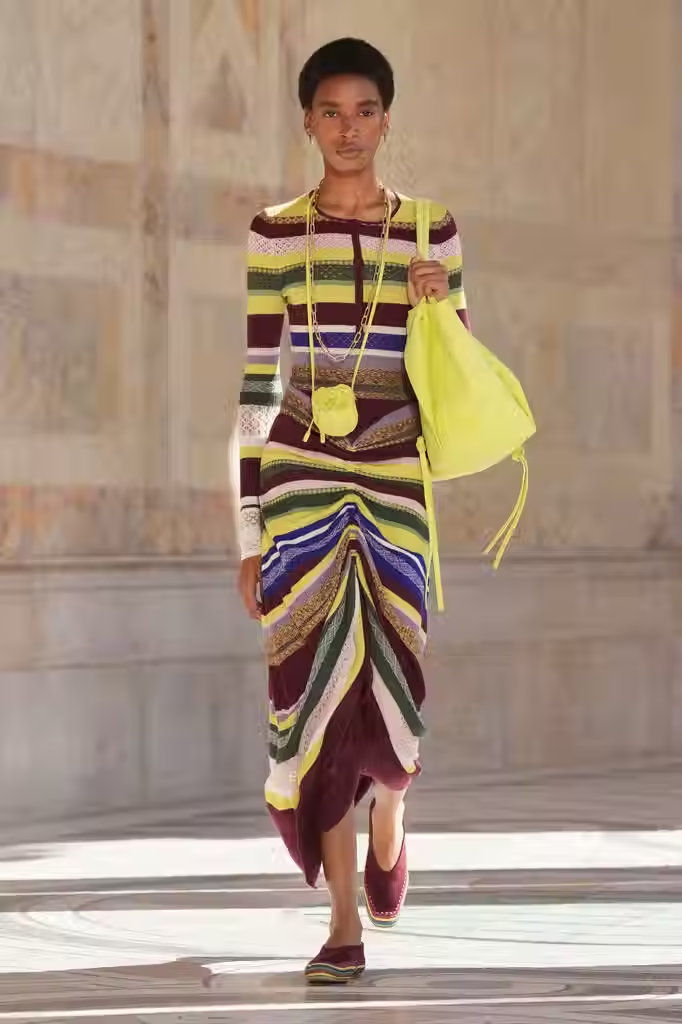
The collection's actual design decisions helped make that balance possible. Rather than reproducing traditional Afghan clothing as costume, Hearst incorporated craft techniques into garments recognisably belonging to her own aesthetic. Mirror embroidery appeared within tailored and knitted pieces, while intricate decoration interacted with contemporary silhouettes. The garments did not claim to represent how Afghan women dress. Instead, they created a meeting point between different design traditions, allowing the craftsmanship to remain visible within a new context.

That distinction matters. Cultural exchange has always been fundamental to fashion, and demanding that designers draw exclusively from their own heritage would produce an impoverished creative landscape. Textiles, silhouettes, techniques and decorative languages have travelled across borders for centuries, transformed by trade, migration, collaboration and curiosity. The issue is not whether a designer may engage with another culture. It is how that engagement happens, whose knowledge is recognised and who benefits when the resulting work acquires commercial value.
Fashion's language of awareness also deserves scrutiny. The industry frequently describes politically or socially themed collections as efforts to start conversations, but conversation is a remarkably convenient outcome because it is almost impossible to measure. A runway can generate millions of impressions without necessarily improving the circumstances of the people whose stories it tells. Media attention can be valuable, particularly when it reaches audiences otherwise disengaged from an issue, but visibility and material impact are not interchangeable.
Hearst's partnership with Turquoise Mountain introduces a more concrete dimension. Working directly with artisans can create economic opportunities and support the continuation of specialised skills. Those contributions deserve recognition. What remains less clear from the publicly available reporting is the longer-term scale of that benefit, including compensation arrangements, production volumes and whether the collaboration will continue beyond Spring/Summer 2027. Without those details, it would be premature either to celebrate the project as transformative or dismiss it as symbolic.
There is also a responsibility on the part of fashion media. When journalists cover collections inspired by politically vulnerable communities, the designer's intentions often dominate the narrative. We hear about the research, the emotional journey, the inspiration and the desire to give something back. The people whose work or experiences made the collection possible can become secondary characters in a story told almost entirely through the designer's perspective.
That imbalance is not inevitable. Coverage can identify the organisations involved, explain the techniques being used, investigate how collaborations operate and, wherever possible, include the perspectives of the makers themselves. In this case, WWD reported that Hearst's team could film only the artisans' hands because showing their identities might expose them to reprisals. That detail illustrates how complicated even the seemingly straightforward act of giving someone public recognition can become.
None of this means fashion should avoid difficult political subjects. On the contrary, the industry's international reach, financial resources and cultural influence give it opportunities to support creative communities that might otherwise struggle for visibility and access to global markets. But those opportunities come with obligations that extend beyond the quality of the finished clothes.

Hearst's Spring/Summer 2027 collection is therefore worth examining as more than a tribute to Afghan women. It represents an attempt to connect luxury design with cultural preservation and artisan participation at a moment of profound political restriction. Its significance lies partly in the beauty of the craftsmanship, partly in the relationships that made the collection possible and partly in the questions it leaves open.
Fashion cannot resolve Afghanistan's political reality, and it would be unreasonable to demand that a designer accomplish what governments and international institutions have failed to achieve. It can, however, choose how it engages with the people whose histories and skills enrich its collections. It can establish partnerships, create economic opportunities, acknowledge authorship and resist reducing entire cultures to decorative inspiration.
The most meaningful measure of such a project may ultimately be found far from the runway. Long after the photographs have circulated and the clothes have entered the retail season, what remains for the women whose work helped create them? That is where the distinction between borrowing a story and contributing something to it becomes clear.


Comments