
You're Probably Wearing Your Clothes Too Correctly
MM6 just turned shirts into dresses, sweaters into skirts and six pairs of Havaianas into one shoe

Most clothes arrive with an implied set of rules. The shirt buttons at the front. The sweater goes over the torso. The trousers begin at the waist and finish somewhere near the ankle. A belt occupies the narrow territory between top and bottom, a scarf belongs somewhere around the neck and a cardigan is worn with its buttons facing whichever direction the designer intended.
We know, obviously, that none of this is law. Yet even people who consider themselves adventurous dressers tend to obey the basic architecture of their wardrobes. We experiment with combinations rather than functions. The strange shoe goes with the sensible skirt. The oversized jacket changes the proportion of a familiar dress. We add jewellery, colour, hosiery or an unexpected bag, but the garments themselves generally remain exactly what we were told they were when we bought them.

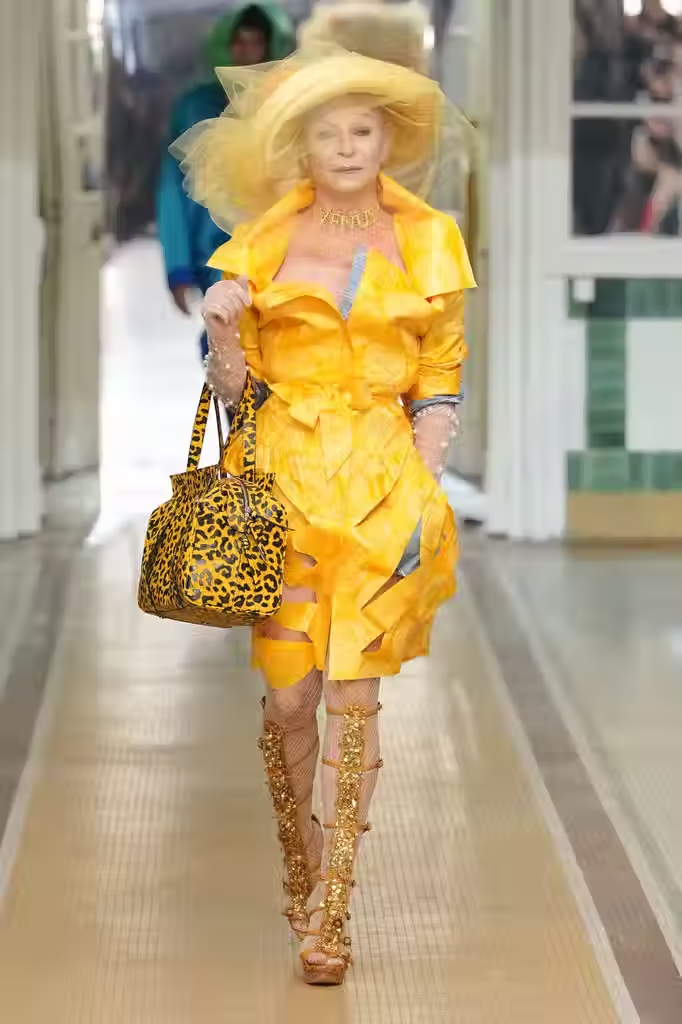
MM6 Maison Margiela's Spring 2027 collection offered a considerably less obedient proposition. Shirts lengthened and shifted into dresses. Trousers were manipulated into tiny skirts. Sweaters migrated down the body and became skirts themselves. Button plackets appeared where they weren't expected, belts multiplied, and a sweater worn around the hips could acquire extra volume through what the studio jokingly called a “hip-paulette.” Even Havaianas were denied their intended simplicity: six flip-flops were stacked together to create a single absurdly elevated shoe.
It was funny, but the joke contained a genuinely useful styling idea. What if the problem isn't that we need more interesting clothes? What if we're simply wearing the clothes we already have too correctly?
THE WARDROBE IS NOT AN INSTRUCTION MANUAL
Margiela has always been particularly good at making ordinary objects unfamiliar. MM6 translates some of that instinct into a wardrobe that is generally more accessible and grounded in everyday clothing, which makes the Spring collection's experimentation particularly relevant. You don't need a conceptual runway garment to participate in the idea. You need a shirt, a sweater, a scarf, a belt and a willingness to ignore what they're supposedly for.
Start with the shirt. We have been given endless advice about how to make one interesting: roll the sleeves, half-tuck it, leave a few buttons undone. All perfectly serviceable, and all still fundamentally respectful of the shirt. A more interesting approach begins when its anatomy becomes negotiable. Button it incorrectly so one side drops lower than the other. Pull it off one shoulder. Wrap it rather than close it. Wear an oversized version open over a dress where a jacket would normally go. Turn it backwards if the construction allows it. Tie the sleeves somewhere other than your arms.

The point isn't to make the shirt look avant-garde. It is to stop treating the garment's intended configuration as its only finished state. Knitwear becomes even more useful once it escapes the upper body. An oversized cardigan can become a soft layer around the hips. A fine sweater can be tied diagonally rather than predictably around the shoulders. Two knits can coexist in different roles, one worn conventionally and another used almost as an accessory. A sweater tied at the waist doesn't have to read as the practical thing you do when you're too warm; manipulated deliberately, it changes volume, interrupts a silhouette and introduces another texture.
Scarves have perhaps suffered most from correct dressing. Their potential is enormous, yet they repeatedly end up neatly knotted around the neck or attached to a handbag handle. They can become belts, hoods, soft corsages, wrist wraps, waist layers or asymmetrical pieces of colour tucked beneath a belt. A large silk square can alter the surface of an otherwise ordinary skirt or jacket without permanently changing either.
None of these ideas requires pretending that every garment can magically become every other garment. Sometimes a pair of trousers is simply going to remain trousers. The useful shift is psychological: stop beginning with “How should this be worn?” and start with “What can this do?”
DISRUPT ONE THING
There is an obvious danger here. Once you decide clothes don't have rules, it becomes remarkably easy to emerge looking as though you lost an argument with your wardrobe.
MM6 can stack six Havaianas because MM6 is constructing a runway proposition. Everyday styling needs considerably more restraint. The most transferable part of the collection isn't its extremity but its method: take something familiar and interfere with one assumption about it.

A very polished look often needs only one thing to misbehave. Wear the immaculate midi skirt and refined knit, but put a sporty sock into the evening shoe. Keep the tailored suit, but replace the expected shirt with something sheer or deliberately underdressed. Wear the romantic dress, but refuse it the romantic shoe. Put the brooch at the hip instead of the lapel. Double two thin belts at slightly different heights. Wear a long scarf beneath a belt so that it becomes part of the silhouette rather than decoration floating above it. Let an oversized shirt hang asymmetrically from underneath a cropped jacket.
The objective isn't randomness. The wrong element works because everything around it establishes what “right” was supposed to look like.
That distinction matters. Interesting styling often depends on tension, and tension requires something to push against. If every component is unconventional, none of them has much power to disrupt the others. A strange accessory against a familiar silhouette can feel more intentional than six strange pieces competing simultaneously for attention.
This is why wearing clothes incorrectly can sometimes make a wardrobe feel more sophisticated rather than less. It requires understanding the conventional answer well enough to know exactly where to interfere with it.
STOP SAVING CLOTHES FOR THEIR ASSIGNED LIFE
There is another kind of correctness that limits wardrobes even more than button placement: category. We own evening clothes, work clothes, holiday clothes, basics, statement pieces, occasion shoes and practical shoes, then wonder why enormous portions of the wardrobe rarely leave their hangers.
The categories are useful when shopping. They're considerably less useful when dressing.
The satin evening skirt does not actually know it is an evening skirt. Put it with a faded sweatshirt, a white shirt or a technical jacket and it enters another life. The crystal shoe doesn't need a cocktail dress; it may be much more interesting underneath denim. The sporty jacket doesn't need leggings. The sequinned piece doesn't know what time it is. The men's shirt isn't aware of the gender written on its label.
This is where the MM6 proposition becomes more valuable than a seasonal styling trick. Reassigning clothes doesn't simply create more interesting outfits. It increases the functional size of the wardrobe without increasing the physical size of it.
That feels particularly relevant at a moment when fashion is simultaneously asking consumers to buy constantly and telling them they should consume more responsibly. Perhaps one answer isn't another perfectly engineered capsule wardrobe consisting of twelve beige things that coordinate flawlessly. Perhaps it's learning to extract more identities from the clothes already there. A garment that works only one way has a limited life. A garment you're willing to reinterpret can keep surprising you.
LET SOMETHING LOOK A LITTLE WRONG

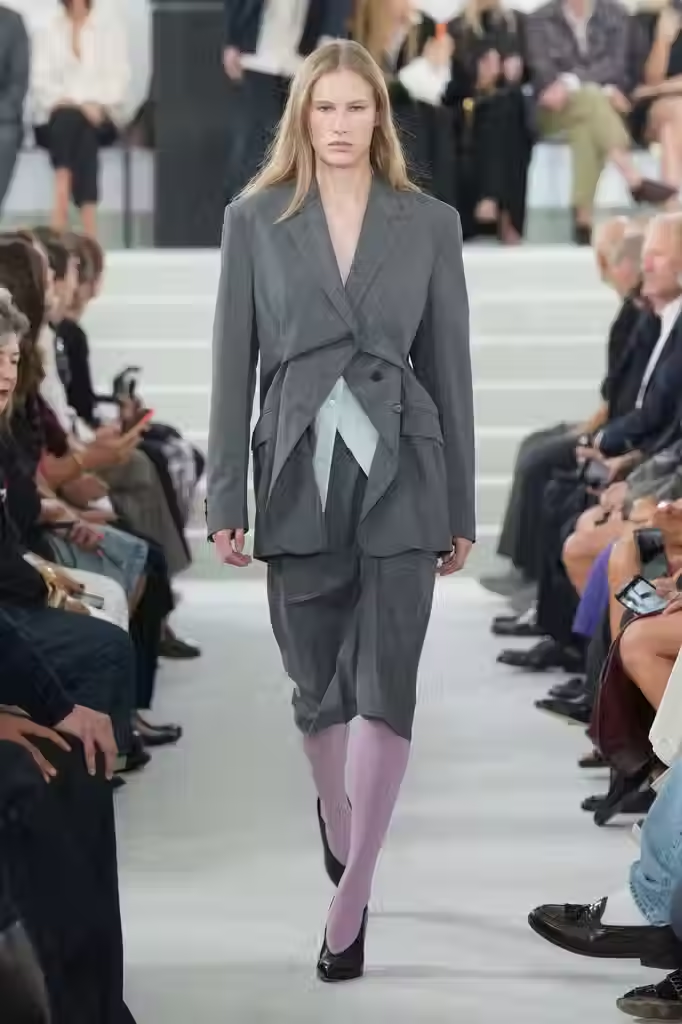
There is a noticeable resistance to polish developing across Spring 2027. At Jil Sander, Simone Bellotti has been deliberately disturbing the house's famous precision with creases, twisting and proportions that feel slightly off. Prada opened Milan with outfits whose components seemed almost determined not to agree with one another. MM6 went further and questioned whether the garments even needed to perform their assigned jobs correctly.
The connection isn't that everyone suddenly wants us to look messy. It is that absolute coherence has started to feel strangely limiting. We have spent years being taught to dress as identifiable aesthetics. Quiet luxury required restraint. Coquette came with bows. Old money had its loafers. Minimalism arrived in monochrome. Algorithms are extremely good at understanding an outfit when every component confirms the same idea.
People are more complicated than that. The best personal style often contains something that requires a second look precisely because it doesn't immediately resolve. The evening shoe appears too glamorous for the trousers. The cardigan is sitting somewhere a cardigan shouldn't. The scarf has become part of the clothes. The proportions are slightly peculiar. Something is backwards, doubled, displaced, overdressed or underdressed.
That small amount of friction is often what separates wearing nice clothes from actually styling them. MM6 Spring 2027 pushed the idea to its logical Margiela extreme. We probably don't need six Havaianas under each foot, and most of us are unlikely to start converting our trousers into miniskirts tomorrow morning.
But the collection does leave us with a very good question to ask the next time a wardrobe feels boring. Before buying something new, take another look at what you already own. Then wear one thing wrong.


Comments