
The Leg Is Back in the Conversation
Colored tights are turning the space between hem and shoe into one of autumn’s most useful styling opportunities

For years, hosiery has been expected to perform one of two jobs: disappear or be black. Nude tights attempted invisibility, while opaque black became the practical punctuation beneath autumn skirts and dresses. Color existed, certainly, but usually as something playful, retro or deliberately eccentric. This season, the runway is making a much more persuasive proposition. The leg itself has become another place to style.
Colored tights are appearing across collections in a remarkably broad spectrum. Marc Jacobs sent out tomato red. Chanel worked with pale seafoam. Valentino offered translucent plum, while Hermès explored burgundy, mustard and olive. At Simone Bellotti’s show, vivid cobalt hosiery interrupted the silhouette with an electric streak of blue. Taken together, the message is difficult to miss: hosiery is moving out of the background.
What makes the return interesting is not simply the presence of color. Fashion periodically rediscovering red tights is hardly revolutionary. The shift lies in how hosiery is being incorporated into the complete composition of a look. Instead of functioning as a quirky final addition, colored tights can extend a palette, interrupt one or deliberately collide with it. They occupy enough visual territory to change the balance of an outfit without changing a single garment.
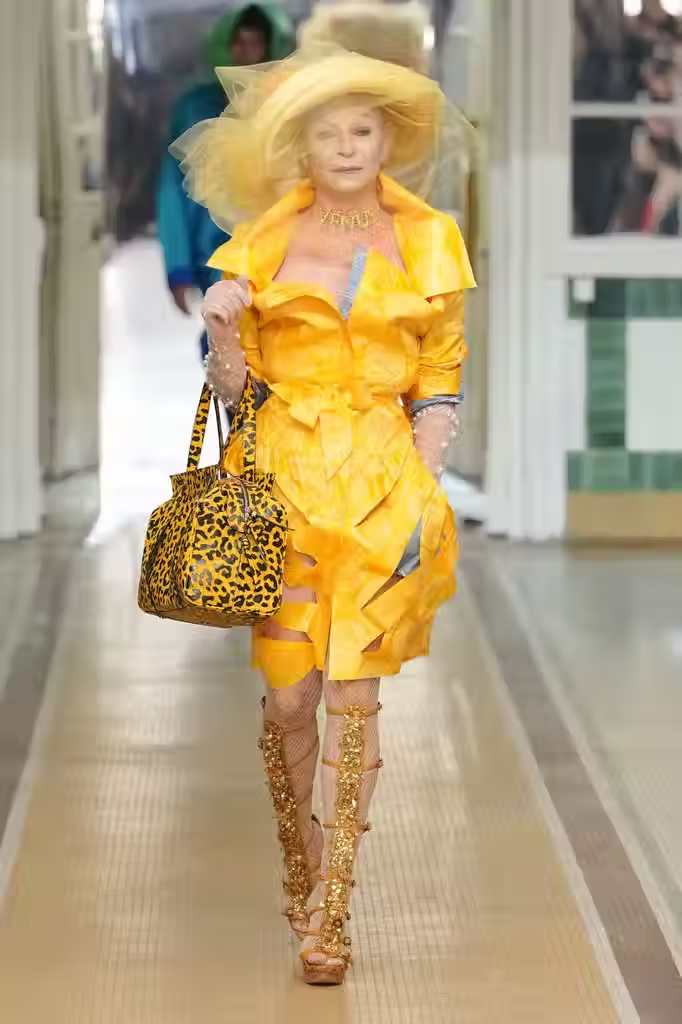
This makes them particularly useful at a moment when personal style is becoming more interested in the act of styling again. A burgundy tight beneath a brown skirt does something different from black. Cobalt beneath grey tailoring changes the temperature of the entire look. Acid yellow appearing between the hem of a sober skirt and a dark shoe introduces tension exactly where the eye does not expect it. Even pale colors can work this way. Powder pink, pistachio or icy blue hosiery can destabilise an otherwise serious autumn palette without making the clothes themselves feel juvenile.

The temptation, however, is to treat colored tights as the statement and build everything else around accommodating them. That is usually where the idea becomes predictable. A red tight beneath an otherwise entirely black outfit certainly works, but it also reduces color to a single obvious punctuation mark. The more interesting approach is to treat hosiery as though it were another fabric in the outfit, subject to the same decisions about proportion, texture and color relationship as a blouse or skirt.
That opens considerably more territory.
A burgundy tight does not need burgundy elsewhere. Try it against powder blue, tobacco brown or dirty pink. Mustard becomes stranger and richer beside violet or chocolate. Cobalt can sit beneath camel rather than being confined to black and white. Tomato red becomes less literal when interrupted by pale pink, olive or an unexpected print. Color becomes especially compelling when the relationship is slightly uncomfortable, close enough to make sense but far enough apart to prevent the outfit from resolving too neatly.
There is also no requirement that the tights be opaque. Sheer colored hosiery creates an entirely different effect because skin becomes part of the color. Plum at twenty denier is not the same proposition as a solid purple leg. Burgundy becomes a wash rather than a block, while smoke, moss, rust and bruised blue can behave almost like filters. This is perhaps the easiest route for someone who finds saturated opaque tights too graphic. The color is present without visually cutting the body into sections.
Shoes then become crucial. Matching shoe and tight can create one uninterrupted column of color, particularly useful beneath midi lengths where only part of the leg is visible. But contrast is often more interesting. Burgundy hosiery with a pale blue shoe, red with brown, mustard with oxblood or lavender with black turns the ankle into a deliberate color junction. A shoe that would ordinarily seem difficult can suddenly make sense because the hosiery creates a bridge between it and the clothes above.
Texture expands the idea again. Fine translucent stockings beneath heavier wool produce one kind of tension; ribbed or opaque hosiery against satin creates another. Pattern can enter too, although once both color and pattern are involved, the rest of the outfit needs enough visual conviction to prevent the tights from looking like costume. The objective is not necessarily restraint. It is coherence. A complicated outfit can accommodate complicated hosiery perfectly well when the colors and proportions are speaking to one another.

Perhaps this explains why the trend feels more relevant now than another seasonal declaration that a particular skirt length or trouser shape has returned. Colored hosiery does not require abandoning what is already in the wardrobe. It changes how those clothes behave.
The black midi skirt that has become too predictable suddenly has another possibility beneath it. The grey coat acquires an unexpected relationship with violet. A floral dress can pull out the least obvious color in its print and continue it down the leg. A conservative suit can be interrupted by an almost absurd shade of green. Even summer pieces can survive deeper into autumn when hosiery becomes an intentional part of their styling rather than a practical concession to temperature.
There is historical baggage here, of course. Colored tights carry memories of the graphic legs of the 1960s and, for another generation, the deliberately eccentric hosiery of the mid-2000s and Tumblr-era twee. Fashion's current appetite for both periods helps explain why the idea has resurfaced. But recreating either era too literally misses what makes the current iteration useful. A mustard tight does not require a minidress and Mary Janes. Red hosiery does not have to announce itself as retro.
The strongest styling takes the color out of its expected reference. Wear it beneath severe tailoring. Put a sugary pink against something industrial. Let an elegant dress meet an ugly green leg. Use burgundy where black would be more obvious, or allow cobalt to collide with a print already carrying several competing colors. The point is not to make tights the most noticeable thing in the outfit. It is to recognise that the space between hem and shoe has been underused.
Fashion frequently sells personal style through acquisition. A new season arrives and, supposedly, requires new clothes. Colored hosiery offers a much smaller intervention with disproportionately large consequences. For relatively little commitment, the palette of an existing wardrobe expands.
Perhaps that is why the return feels particularly welcome. The most interesting styling does not always begin with finding something new to wear. Sometimes it begins by looking at the outfit you already know and asking what happens if one apparently insignificant element refuses to behave as expected.
This autumn, start with the legs.


Comments