
New York Is Having Fun With Clothes Again
Print clashes, strange bags, sharp shoes and scarves worn everywhere: the best street style at NYFW

The runways spent the past week telling us what we might want to wear next spring. Outside the shows, New York was considerably more interested in what to wear right now.
That distinction is part of what makes fashion week street style useful. The clothes arriving on the runway are proposals, edited into the particular universe of a designer and presented months before most of them can be bought. The clothes outside are already in circulation. Editors, buyers, stylists, creators and guests have taken pieces from different seasons, brands and price points and decided what actually deserves to be worn together. If the runway tells us where fashion is going, the street often provides a much faster reading of where getting dressed has already arrived.
For Spring/Summer 2027 New York Fashion Week, that reading was encouragingly difficult to reduce to one uniform. There was more color, more pattern and considerably more willingness to let an outfit contain several ideas at once. After seasons in which street style could occasionally appear dominated by variations of the same oversized blazer, neutral tailoring and carefully acquired It bag, New York looked as though it was having fun again.

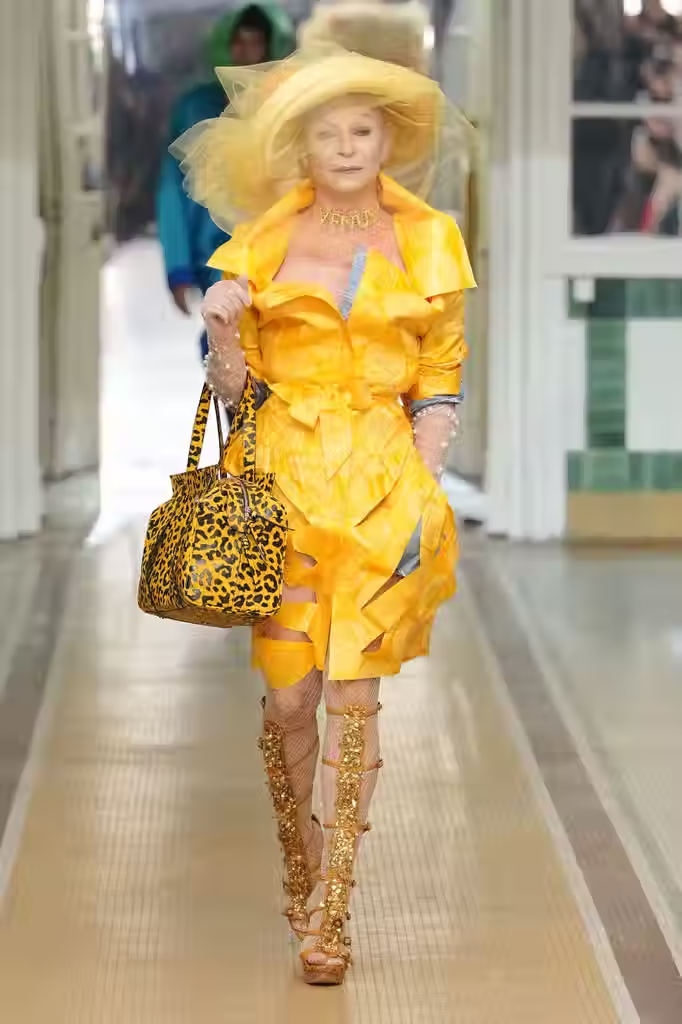
Print was everywhere, and behaving badly in the best possible way. Plaid met zebra. Stripes appeared with other patterns. Polka dots, checks and pinstripes moved through the week, while leopard and other animal motifs appeared across skirts, jackets, coats and accessories. The important development was not the return of any one print but the declining need to isolate it. Animal print in particular has travelled far enough beyond its most recent revival to behave almost like a neutral. A leopard piece no longer necessarily requires the rest of the outfit to calm down around it.
That made some of the strongest looks feel assembled rather than coordinated. A pattern could interrupt another pattern. A feminine piece could meet something utilitarian. A conventional autumn texture could appear beside a color that seemingly belonged to another season. There was a willingness to leave a little friction in the outfit rather than resolving every element into perfect harmony.
Color benefited from the same attitude. Burgundy and the familiar family of wine reds were visible, but New York did not settle into an entirely autumnal palette. Chartreuse, pink, teal, blue and brighter reds punctuated the streets, often appearing as one part of a more complicated combination rather than the obligatory “pop of color.” That phrase increasingly feels inadequate for what good dressers are doing. Color is more interesting when it participates in the outfit rather than being assigned the job of rescuing an otherwise neutral one.

The weather created its own peculiar styling exercise. September in New York was still warm and humid, yet coats and jackets were remarkably persistent. Some attendees seemed determined to begin autumn regardless of what the thermometer had to say, while others held onto summer pieces. The collision produced one of the week's most wearable ideas: seasonal ambiguity.
Lightweight jackets sat over abbreviated bottoms. Leather and suede appeared before the weather technically required either. Knitwear met exposed skin. Long coats shared the sidewalk with sandals. Rather than looking confused, the best combinations demonstrated how useful transitional dressing can be when it is treated as an opportunity instead of an inconvenience. A wardrobe becomes much more interesting when pieces stop being confined to the season printed on their original retail tag.
Texture helped. Fringe was particularly visible, but it had moved beyond the predictable bohemian formula. A fringed skirt could meet a graphic T-shirt and white boots rather than suede and something vaguely festival-adjacent. Fuzzy surfaces appeared against cargos and tailoring. Leather, sheer fabrics, denim, knits and polished shirting were repeatedly pushed together. The effect was tactile without becoming precious.

And then came the scarves.
Fashion has spent several seasons rediscovering just how many jobs a square of silk can perform, and New York showed little evidence that the fascination is ending. Scarves appeared at the neck, certainly, but also at the waist, where they behaved almost like soft cummerbunds, and elsewhere as styling devices rather than purely decorative accessories. That distinction matters. The scarf has become useful precisely because it can alter the proportion, color or reference of clothes someone already owns.
The waist more broadly was active again. Belts were doubled, layered and worn over clothes rather than obediently threaded through loops. Silk was wrapped around the middle. The renewed interest in cummerbund-like styling, already appearing on runways, could be seen filtering into the way fashion people were manipulating otherwise straightforward shirts, trousers and jackets. After years dominated by oversized silhouettes that often deliberately ignored the waist, there is pleasure in seeing people play with it again without necessarily returning to rigid hourglass dressing.
Shoes were sharper. Pointed heels appeared repeatedly, providing a useful counterweight to relaxed trousers, oversized layers and deliberately less polished clothing. But practicality remained part of the New York equation; the fashion-week habit of carrying flats alongside less forgiving shoes is alive for good reason. Elsewhere, boots helped drag lighter clothes toward autumn, while less formal footwear prevented tailoring from becoming too corporate.

The bags deserve their own conversation because this was not a week dominated by one immaculate black rectangle.
There were recognizable luxury bags, of course, and Coach was particularly visible around its own show, with Tabbys, Kisslock frames and newer shapes moving through the crowd. But the more interesting direction was toward bags with character. Novelty shapes, texture, color, embellishment and less predictable proportions made accessories active participants in outfits. A teal clutch could sit against fringe and a graphic tee. Animal pattern could migrate onto the bag itself. Some looks treated bags almost as another opportunity for pattern or color collision rather than requiring them to match anything.
That shift feels significant after the long reign of the deliberately discreet handbag. The beautifully made, minimally branded leather bag is not disappearing, nor should it. But fashion appears increasingly willing to let the bag be funny, strange, decorative or conspicuous again. A handbag does not always need to communicate permanence and investment. Sometimes it can simply make the outfit better.
The same thinking appeared in jewellery and smaller accessories. Rather than relying upon a single obvious statement piece, styling frequently accumulated through details: layered necklaces, brooches fastening scarves, hats, sunglasses and belts added another visual beat. Accessories were not being applied after the outfit was complete. In the best looks, they were part of the construction of it.

This is perhaps the clearest takeaway from New York's streets. Styling is becoming visible again.
For a while, the dominant aspiration in fashion seemed to be making expensive clothes look effortless. The perfect coat, the correct denim, a loafer, a beautiful bag and perhaps one carefully restrained piece of jewellery could communicate taste without appearing to have required much thought. There is nothing wrong with that way of dressing, but its dominance inevitably produced sameness.
This season's streets offered something less disciplined and much more enjoyable. People mixed prints. They wore too many necklaces. They tied fabric around their waists. They carried bags that did not politely disappear into the outfit. They put autumn coats over summer clothes because they wanted to wear the coat. They allowed something elegant to meet something scruffy and occasionally let colors sit together without asking whether they technically matched.

Not every experiment worked. That is also part of the appeal. Street style becomes considerably less interesting when everyone is dressing primarily to demonstrate mastery of the same rules. New York's best looks this season suggested that personal style is moving back towards intervention: taking the clothes and doing something to them, around them or against them.
The easiest ideas to steal require surprisingly little. Put the leopard next to another print. Wear the scarf somewhere other than your neck. Add the strange bag instead of the sensible one. Let a pointed shoe sharpen an otherwise slouchy outfit. Pull a jacket into the season earlier than expected. Introduce a color that has no obvious business being there.
The Spring 2027 collections may have been happening inside the venues, but outside, New York offered a more immediate proposition.
Getting dressed is allowed to look like you enjoyed doing it.


Comments