
Scandinavia Is Building More Than One Fashion Capital
In 2026, the story of Scandinavian fashion is no longer contained within one city
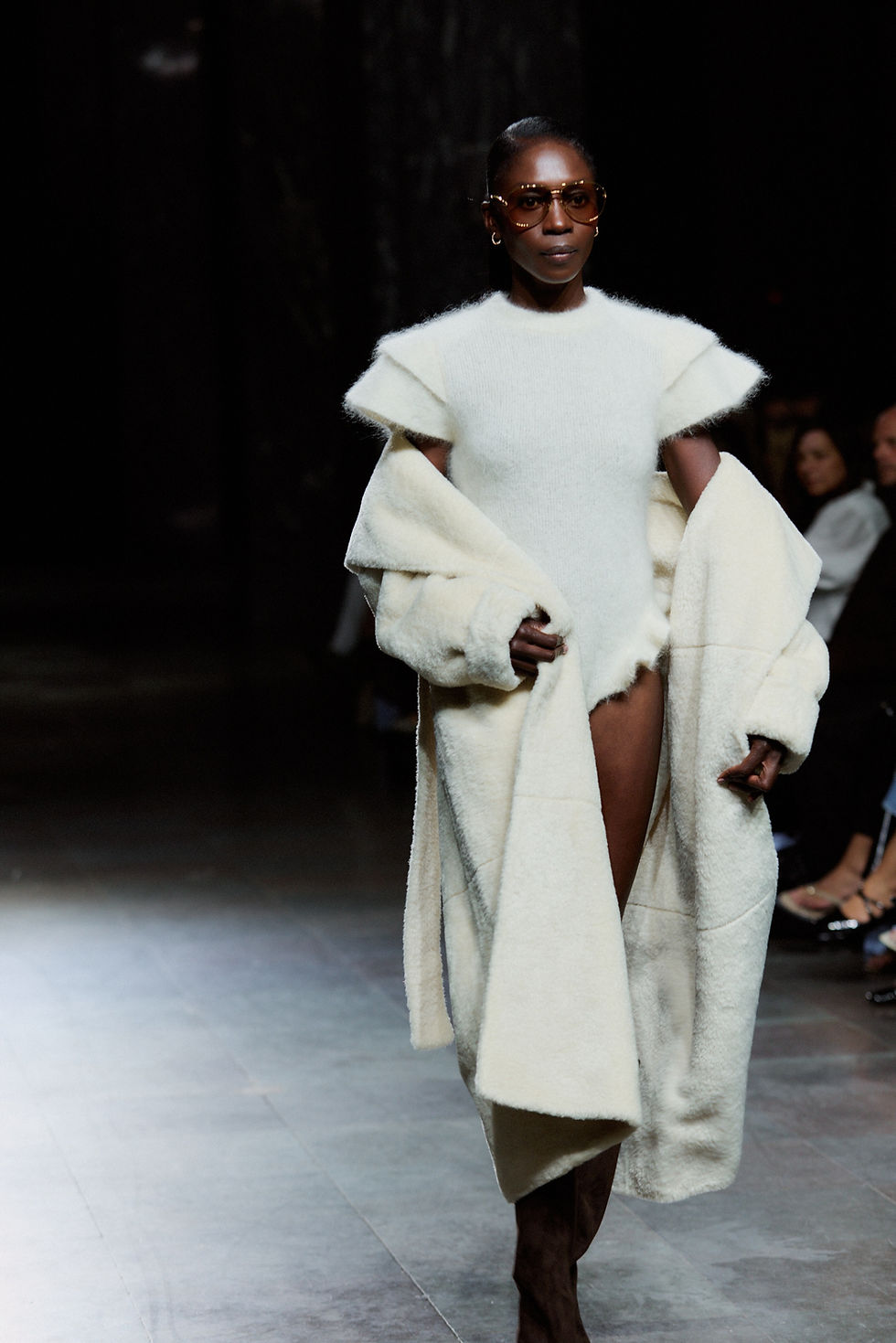
For years, Copenhagen has provided international fashion with a particularly persuasive version of Scandinavia.
There were the bicycles and extraordinary street style photographs, the colourful knitwear and easy tailoring, the rise of Ganni, the buyers and editors arriving every February and August. Gradually, Copenhagen Fashion Week stopped feeling like an interesting regional addition to the fashion calendar and became a destination in its own right.
In 2026, it celebrated its twentieth anniversary from a very different position to the one it occupied at its founding. Denmark's fashion industry has grown considerably over those two decades. Copenhagen Fashion Week says total industry revenue has increased by 24 per cent since 2006, while fashion exports have risen by 84 per cent and now account for two thirds of the Danish industry's revenue. Fashion represents around five per cent of Denmark's merchandise exports.
Those numbers matter because Copenhagen's ascent has occasionally been reduced to aesthetics. Its influence is easy to see in photographs, but considerably more has been built behind them. The more interesting question in 2026 is what happens when that influence begins spreading north.
COPENHAGEN GROWS UP

Copenhagen Fashion Week's Spring Summer 2027 edition, held from 3 to 7 August, was its largest yet in terms of attendance, according to the organisation. Thirty four shows and presentations appeared on the official schedule, bringing together established Nordic labels, emerging designers and an increasingly deliberate international presence.
That last part is important. Copenhagen is no longer relying exclusively on Scandinavian fashion to attract international attention. For Spring Summer 2027, New York label Collina Strada was invited to stage a one off show through Copenhagen Fashion Week's newly introduced International Guest Slot. Institution, winner of the 2026 Zalando Visionary Award and an LVMH Prize finalist, joined the schedule, while Finnish label Marimekko returned alongside Danish names including Stine Goya, By Malene Birger and Mfpen.
The NEWTALENT programme continued with Anne Sofie Madsen and Stem, joined by Swedish label Studio Constance, the first Swedish brand admitted to the scheme. Beyond runway access, participating designers receive financial support, mentorship, professional advice, partnership opportunities, showroom activations and international publicity over three seasons.
Copenhagen, in other words, has developed infrastructure.
That may ultimately prove more important than any particular Scandinavian aesthetic. Its influence can also be seen in one of the least glamorous parts of fashion week organisation: the rules. Copenhagen introduced binding minimum sustainability requirements for brands appearing on its official schedule, with an updated framework fully implemented in 2026. Versions of that approach have subsequently been adopted through partnerships with the British Fashion Council, Fashion Council Germany, Amsterdam Fashion Week, Norwegian Fashion Hub and Oslo Runway.
Copenhagen has therefore reached the stage at which other fashion organisations are not simply watching its designers. They are studying its machinery.
THEN CAME OSLO

Three weeks after Copenhagen's anniversary season, attention shifted to Norway. Oslo Runway 2026 took place from 31 August to 5 September, with its official schedule and international hospitality programme concentrated across the opening three days. Established in 2015, Oslo Runway describes itself as Norway's leading showcase for fashion, design and emerging talent, operating at the intersection of fashion, art and culture.
The difference in scale between Oslo and Copenhagen is obvious. It is also beside the point.
Oslo does not currently possess Copenhagen's international fashion infrastructure, nor its two decades of accumulated visibility. What it does have is an increasingly clear understanding that Norwegian fashion needs a platform of its own.
The 2026 programme unfolded across Oslo and its surrounding region rather than inside a single fashion week compound. The official opening dinner and awards ceremony took place at Kistefos Museum, where contemporary art, architecture and Norwegian landscape coexist. Elsewhere, the programme extended into stores, galleries and cultural spaces across the city.
That geographic looseness gives Oslo Runway a character distinct from the increasingly polished international machine Copenhagen has become. It also allows Norway itself to enter the fashion conversation.
BEYOND SCANDINAVIAN MINIMALISM

The international shorthand for Scandinavian fashion has always been inadequate. Minimalism is part of the region's design history, but in 2026 it tells remarkably little of the story unfolding in Oslo.
Take 1313 SELAH, the Oslo menswear label founded in 2023 by Duy Ngo, Tomas Silva and Erik Spanne. Its work draws from politics, spirituality, cultural heritage, Latinx street culture, music and subculture, combining exaggerated silhouettes with tailoring, streetwear and ceremonial references.
Or Wilhelmina, one of the two labels selected for Oslo Runway NEXT in 2026. The slow fashion brand works exclusively with locally sourced existing textiles, incorporating knitting, crochet and references to Nordic folk dress and ritual. Anna Ringstad, the other NEXT recipient, brought a considerably bolder visual language to a programme that has no obligation to conform to the neutral palette so often projected onto Nordic fashion.
The broader schedule stretched even further. There was technical and functional clothing, jewellery, knitwear, sportswear and established Norwegian fashion businesses alongside experimental young designers. A new Jewelry Room gathered Nordic jewellery labels including A.S.G, Aur Studio and Ravn, expanding Oslo Runway's previous approach to jewellery into a dedicated showroom and meeting space.
Norwegian fashion starts to become considerably more interesting when nobody asks it to look generically Scandinavian.
COMING HOME
Perhaps the most symbolic name on Oslo's 2026 schedule was Holzweiler.

The Norwegian label had previously shown at Copenhagen Fashion Week. This season, it returned to Oslo Runway. One brand changing cities does not constitute an industry migration, and it would be easy to overstate its significance. But the return provides a useful image for what Oslo is attempting to build.
For emerging fashion markets, international visibility can create a peculiar dilemma. Designers need larger platforms to grow, yet when the most successful leave for those platforms, the local fashion ecosystem loses precisely the names capable of attracting international attention. Copenhagen has spent twenty years solving that problem for Denmark and, increasingly, for the wider Nordic region. Its strength now means that a designer can show there without the decision feeling provincial. International editors, buyers, photographers, stylists and creators already come to Copenhagen.
Oslo is earlier in that process. Its challenge is not simply producing talented Norwegian designers. They already exist. The harder task is creating enough infrastructure around them that the international fashion industry has a reason to come to Norway to see them.
TWO DIFFERENT MODELS

This is where the Scandinavian fashion story becomes more interesting than a simple competition between cities. Oslo does not need to become Copenhagen.
Copenhagen itself did not become influential by successfully impersonating Paris. Its ascent came partly from identifying what it could do differently: placing emerging designers alongside commercially established Nordic brands, turning sustainability requirements into institutional policy, cultivating unusually powerful street style visibility and creating an environment that international visitors increasingly wanted to experience.
Its twentieth anniversary year suggests that strategy has matured. Oslo's opportunity is to find an equally specific proposition.
Some of the foundations are already visible. Oslo Runway operates year round rather than existing solely for a week of shows. Its NEXT programme supports emerging brands, while its Talent Award spotlights graduating designers. Its annual Tribute Awards recognise Norwegian fashion and lifestyle businesses and, from 2026, individuals contributing to the industry.
There is also direct institutional crossover between the two cities. Oslo Runway, Norwegian Fashion Hub and Copenhagen Fashion Week began working together in 2021 to introduce minimum sustainability requirements into the Norwegian fashion and lifestyle industry. Oslo Runway fully implemented those requirements for brands on its official schedule in 2024.
This matters because Scandinavian fashion is not developing as a collection of completely isolated national industries. Knowledge travels. Designers travel. Buyers and press travel. Standards developed in Copenhagen can be adapted in Oslo. A Norwegian brand can show in Denmark and return home. A Swedish designer can enter Copenhagen's emerging talent programme. International designers can now be invited into the region rather than Nordic designers always having to leave it. The flow is becoming multidirectional.
THE SCANDINAVIAN QUESTION

Copenhagen's rise has already changed how the global fashion industry looks at Northern Europe.
The next stage may change what it sees. For a long time, Scandinavian fashion could be exported as an easily recognisable proposition: functional, democratic, minimalist, responsible, cool without appearing to try very hard. It was an enormously successful piece of cultural shorthand.
The actual fashion coming from the region is becoming harder to compress into that image.
Copenhagen's 2026 schedule moved between Danish, Swedish, Finnish and international designers. Oslo brought Latinx influenced menswear, upcycled interpretations of Nordic folk traditions, technical clothing, sculptural jewellery, sportswear and experimental young labels into the same programme.
That complexity is a sign of maturation. A fashion region becomes more compelling when its designers are no longer required to perform their nationality in the same way.
NORTH, FROM HERE
Copenhagen has already demonstrated what patient fashion infrastructure can achieve. Twenty years after its establishment, it can attract international designers to show in Denmark, support emerging Nordic talent through structured programmes and export parts of its organisational model to other fashion councils. It enters its third decade with a level of international recognition that would have been difficult to imagine when the platform began in 2006.
Oslo is eleven years into a much younger story. Its 2026 edition did not suggest a city trying to challenge Copenhagen for ownership of Scandinavian fashion. Something more useful is happening. Norway is strengthening its own platform while remaining connected to the wider Nordic fashion ecosystem.
There is room for both. In fact, Scandinavian fashion may need both.
Copenhagen provides the established international gateway. Oslo offers another perspective, one shaped by a different industry, geography and generation of designers. Stockholm, Helsinki and the wider Nordic region add further layers to a fashion culture that increasingly resists being condensed into one city or one aesthetic.
The significance of 2026 is therefore larger than another successful season in Copenhagen or another Oslo Runway. Scandinavian fashion is beginning to look less like a single destination and more like an ecosystem.
And that may be the more interesting measure of its growth.


Comments