
Alaïa without a creative director still looks like Alaïa
Following Pieter Mulier's departure for Versace, Alaïa presented its Spring/Summer 2027 collection without a named creative director

Fashion loves a creative director. Preferably one with a recognizable face, an interesting wardrobe, a substantial Instagram following and a personal mythology that can be turned into a campaign before the first collection has even reached the runway. The industry has become so accustomed to presenting designers as singular creative geniuses that it can occasionally appear to forget how many people are actually involved in making a collection.
Alaïa offered a useful reminder in Paris this season. Following Pieter Mulier's departure to Versace, the house presented its Spring/Summer 2027 collection without appointing a new creative director. Instead, the design studio continued the work, producing a collection that looked unmistakably like Alaïa.
There were sculpted bodysuits, precise leather tailoring, fitted dresses with playful, flaring skirts and coats that balanced architectural construction with sensuality. Pleated skirts cut on diagonal lines introduced movement, while finely worked micro-pleating brought delicacy to cocktail dresses. The familiar relationship between body, fabric and form remained intact.
For a house whose identity is so closely associated with exceptional construction, this continuity was significant. The collection did not announce a dramatic new era. It demonstrated that Alaïa's existing design language could survive the departure of the person most recently responsible for directing it.
The myth of the indispensable designer

Luxury fashion has spent the past several years treating creative-director appointments almost like sporting transfers. Designers move between houses, speculation builds around their successors, and entire marketing narratives are constructed around the arrival of a new personality. The debut collection becomes an event, the second collection a test, and every subsequent season another opportunity to assess whether the appointment is working.
There are understandable reasons for this obsession. A strong creative director can transform a brand's identity, introduce new customers and establish a recognizable aesthetic that extends across products, campaigns and retail environments. Mulier himself demonstrated that potential at Alaïa, where his tenure brought renewed visibility to the house and helped establish a contemporary vocabulary of sculptural, body-conscious dressing.
But creative direction and creative execution are not the same thing. Behind every successful designer is a network of pattern cutters, technicians, textile specialists, sample makers, studio designers and artisans whose expertise makes the creative vision possible. Their contributions are fundamental to the finished garments, yet their names rarely become part of the public conversation.
The industry celebrates the person who presents the collection while largely overlooking the people who construct it. Alaïa's Spring/Summer 2027 presentation made that imbalance unusually visible. Without a named creative director to frame the work, attention returned to the garments and the collective expertise responsible for producing them.
A house with a language of its own

Alaïa is particularly well positioned to explore this arrangement because its identity was never built entirely around seasonal novelty. Azzedine Alaïa developed an exceptionally recognizable approach to the female body, combining technical precision with an understanding of how fabric could shape, reveal and move around it. His clothes were often sensual without sacrificing structural intelligence, and their appeal depended as much on construction as on appearance.
That foundation provided Mulier with a distinctive heritage to reinterpret. His contribution was not simply to reproduce the founder's silhouettes, but to bring the house's technical vocabulary into a contemporary fashion conversation. His collections explored volume, movement, transparency and proportion while maintaining the intimate relationship between clothing and the body that defines Alaïa.
The studio's latest collection suggests that this vocabulary has become sufficiently established to continue without an immediately appointed successor. That does not mean creative directors are unnecessary. Maintaining an existing identity and developing its next compelling chapter are different responsibilities. A studio can possess extraordinary technical expertise while still benefiting from someone capable of challenging assumptions, establishing priorities and deciding when a familiar design language needs to evolve.
There is also a difference between one successful collection and a sustainable long-term creative structure. Alaïa's studio has inherited both the founder's legacy and the direction established under Mulier. The more revealing test will be whether it can continue developing those ideas over several seasons without becoming overly dependent on familiar signatures.
The value of a quieter transition
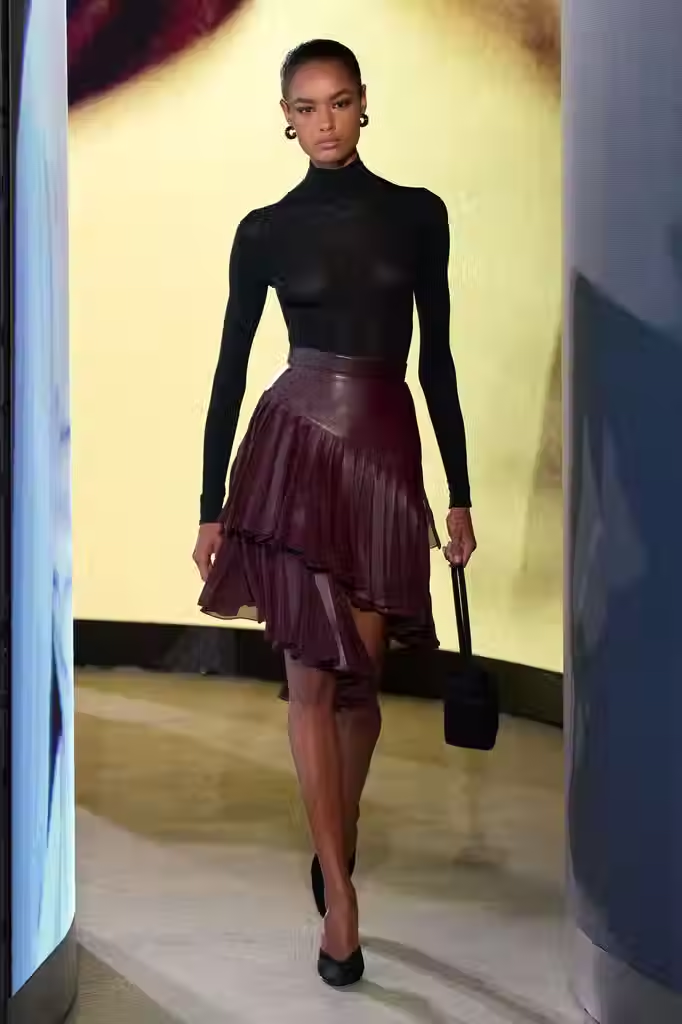
The most interesting possibility is that Alaïa's management may be willing to observe the response before making another high-profile appointment. Whether that is the actual strategy remains unconfirmed, but the absence of an immediate successor creates an unusual opportunity to assess what the existing team can accomplish.
It also offers a contrast to the constant disruption created by luxury fashion's creative-director reshuffles. When a designer leaves, the consequences extend beyond the headlines. Studio teams may face new expectations, changes in working methods and uncertainty about their futures. Collections already in development can be redirected, while established expertise risks becoming secondary to the incoming designer's desire to establish a personal identity.
A period of continuity can therefore be more than a temporary solution. It can preserve institutional knowledge and allow a house to consider its next direction without immediately rebuilding itself around another personality. Of course, there are commercial realities to consider. A recognizable creative director attracts press attention, generates anticipation and provides a convenient public figure through whom a brand can communicate its ambitions. Fashion's fascination with star designers is not entirely irrational. Personalities can be powerful business assets.
But Alaïa's latest collection raises the possibility that the industry has become too dependent on them as the primary explanation for creative success.
The people behind the clothes

There is something particularly appropriate about this experiment happening at Alaïa. Azzedine Alaïa was celebrated for his relationship with the physical process of making clothes, working closely with garments, materials and the bodies they were designed to dress. His legacy is inseparable from the expertise of the atelier.
The Spring/Summer 2027 collection does not prove that fashion houses can dispense with creative directors indefinitely. Nor does it establish that a collective studio structure will necessarily produce more original work than an individual designer. Those conclusions would require considerably more evidence than one presentation can provide.
What it does demonstrate is that a fashion house's identity can exist beyond the person currently occupying its most visible creative position. The bodysuits, leather tailoring, sculptural coats and precisely engineered skirts did not suddenly lose their character because there was no celebrated designer waiting to take a bow. The work continued, supported by people who understood what made Alaïa recognizable in the first place.
For an industry that has become extraordinarily good at promoting creative individuals, that is a useful reminder. A designer can establish a vision, but a fashion house also depends on the people who know how to turn that vision into something real. Alaïa has not necessarily discovered that it no longer needs a creative director. It has demonstrated something perhaps more important: the creative director was never doing it alone.


Comments