
Moschino Has Remembered That the Joke Needs a Point
The debut of Loris Messina and Simone Rizzo suggests they understand the attitude of the house better than its wardrobe. For now, that might be enough.

Moschino has never had a shortage of jokes. The problem is that somewhere along the way, the joke became the product. That distinction matters when considering the Spring 2027 debut of former Sunnei founders Loris Messina and Simone Rizzo. Franco Moschino built a house that was funny, certainly, but humour was rarely the destination. It was a weapon. He mocked luxury while participating in it, questioned fashion's obsession with status and good taste, and used clothes to make observations about consumerism, excess and the absurdity of the industry selling them. A Moschino jacket covered in gold cutlery wasn't simply supposed to make you laugh. It was supposed to make you wonder what, exactly, everyone was taking so seriously.
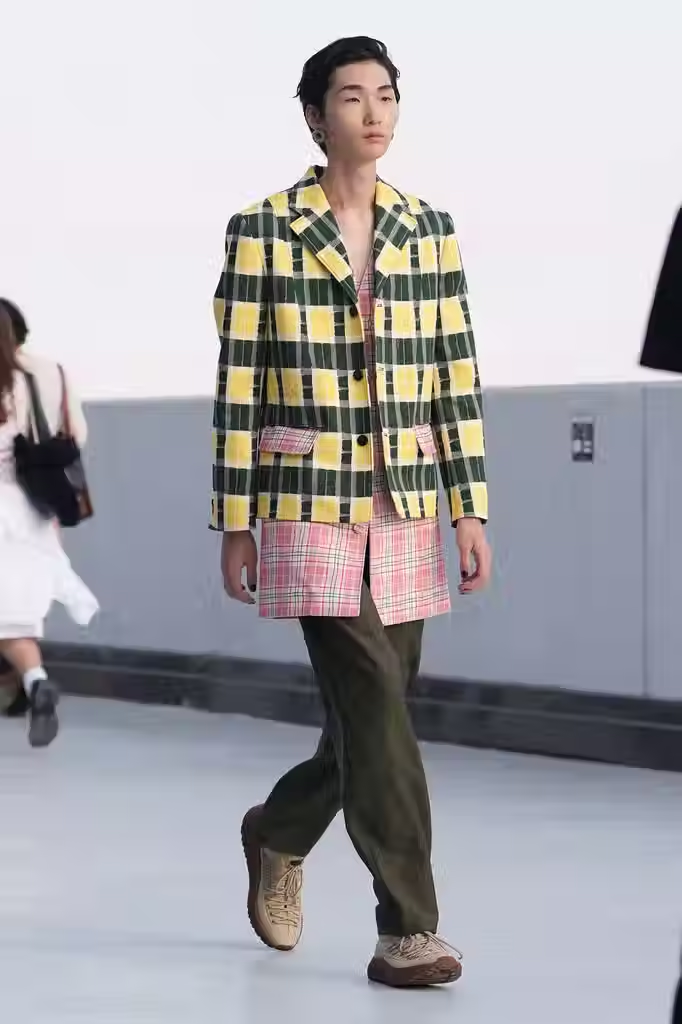
Messina and Rizzo appear to understand that. Rather than beginning their tenure by raiding the archive for familiar hearts, chains, teddy bears and visual punchlines, they have spoken about wanting to recover Moschino's way of thinking. Their debut took place on the roof of a Milan parking garage, where hundreds of people moved through the space alongside the models. Graffiti, distorted proportions, deliberately awkward styling and ordinary clothing collided with the exaggerated visual language expected of the house. The spectacle wasn't presented as some immaculate luxury fantasy. It looked unruly, crowded and intentionally close to real life.

That is where the collection felt most promising. Messina and Rizzo seem interested in the friction between fashion and the people who actually encounter it. Their years at Sunnei make that unsurprising. They built a brand as interested in community, performance and challenging the machinery of fashion as it was in producing clothes. At Moschino, that instinct suddenly has decades of institutional history behind it.

The problem is that understanding why Moschino exists is not quite the same thing as understanding what Moschino should look like now.
Spring 2027 occasionally felt as though Messina and Rizzo had worked out the intellectual argument before finding the wardrobe capable of carrying it. The distorted bodies, graffiti, anti-luxury gestures and intentionally strange combinations supplied plenty of ideas, but the clothes did not always possess the precision that made Franco Moschino's satire so effective. His genius was that the joke could be ridiculous while the garment underneath it remained extraordinarily convincing. Wit and desirability were not competing propositions.
That balance is harder than simply making Moschino weird again.
There are moments here when irreverence slips toward randomness, or when the styling appears to be doing more argumentative work than the individual garment. Messina and Rizzo clearly know they don't want to reproduce an archive, which is encouraging. They seem less certain about what should replace its most recognizable vocabulary. But perhaps a debut is allowed to leave that unresolved.


Comments